

Giroux, Alphonse – „Tours recreatif de societe“ / „Physique amusante“
Paris, Alph. Giroux et C.ie, ca. 1850.
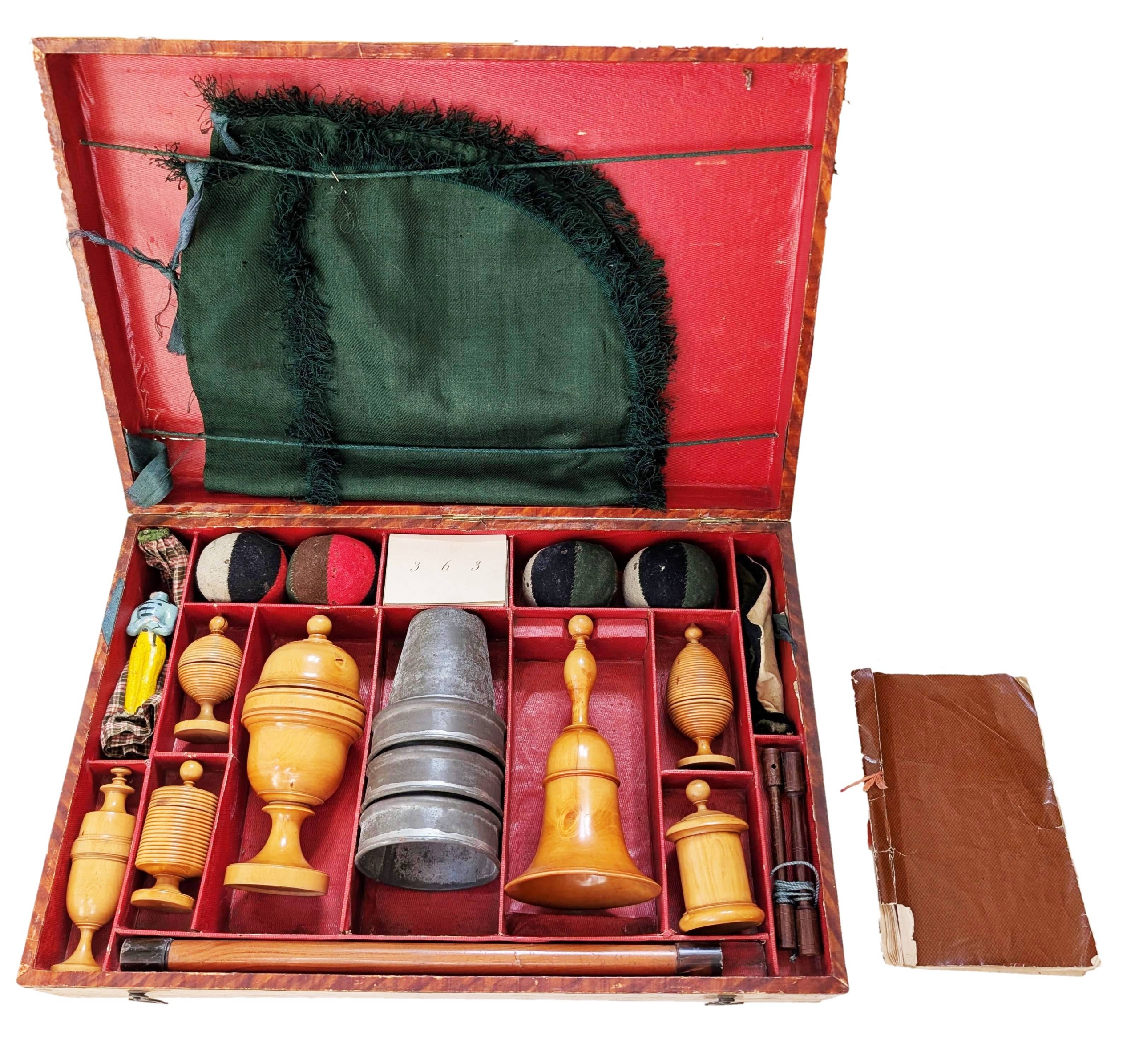
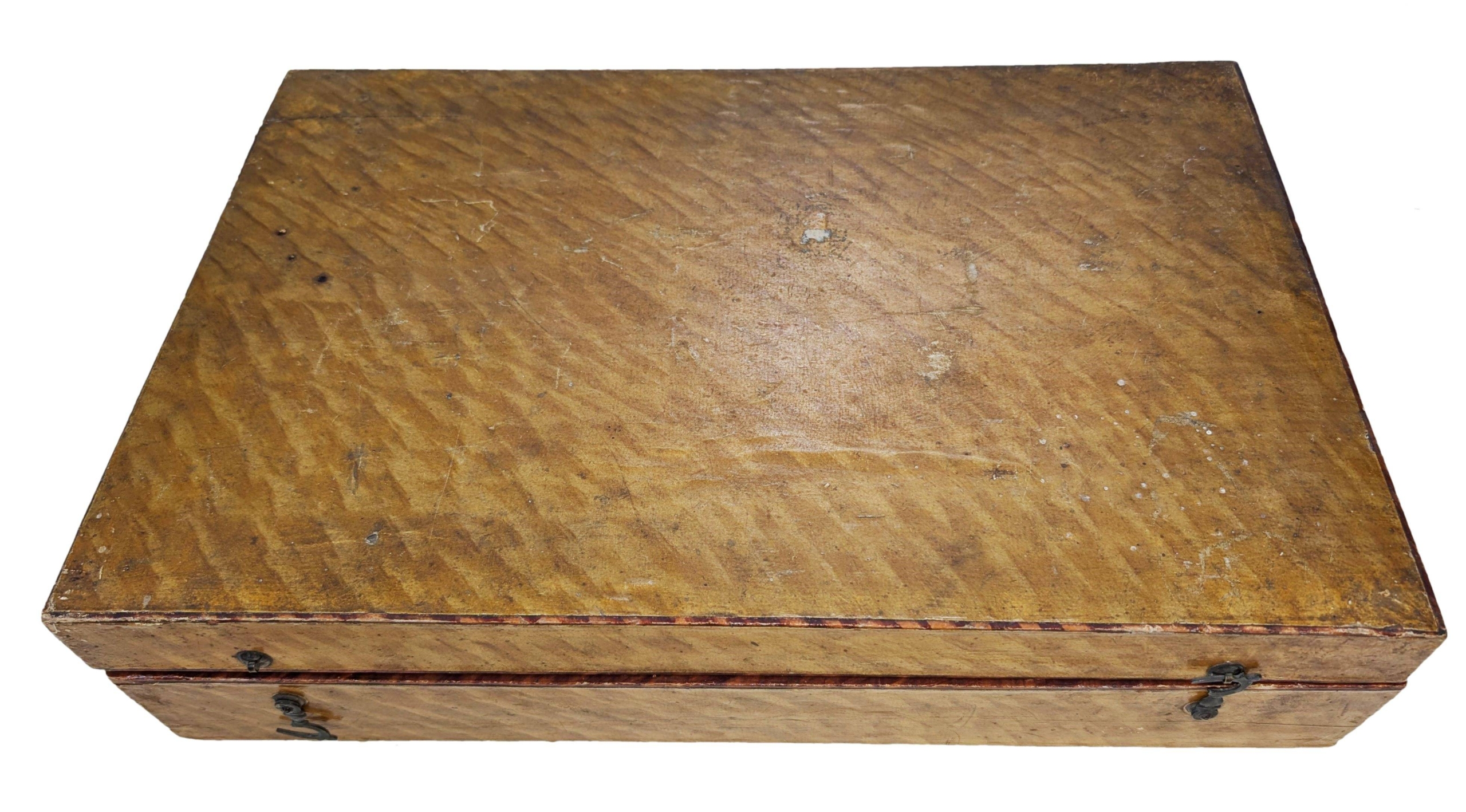
A rare mid-19th-century French conjuring set, housed in a large wooden case [ca. 28,5 x 43,5 cm] with a crimson paper-lined interior. The set was sold by the firm of Alphonse Giroux, a prominent Parisian tabletier and luxury goods merchant.
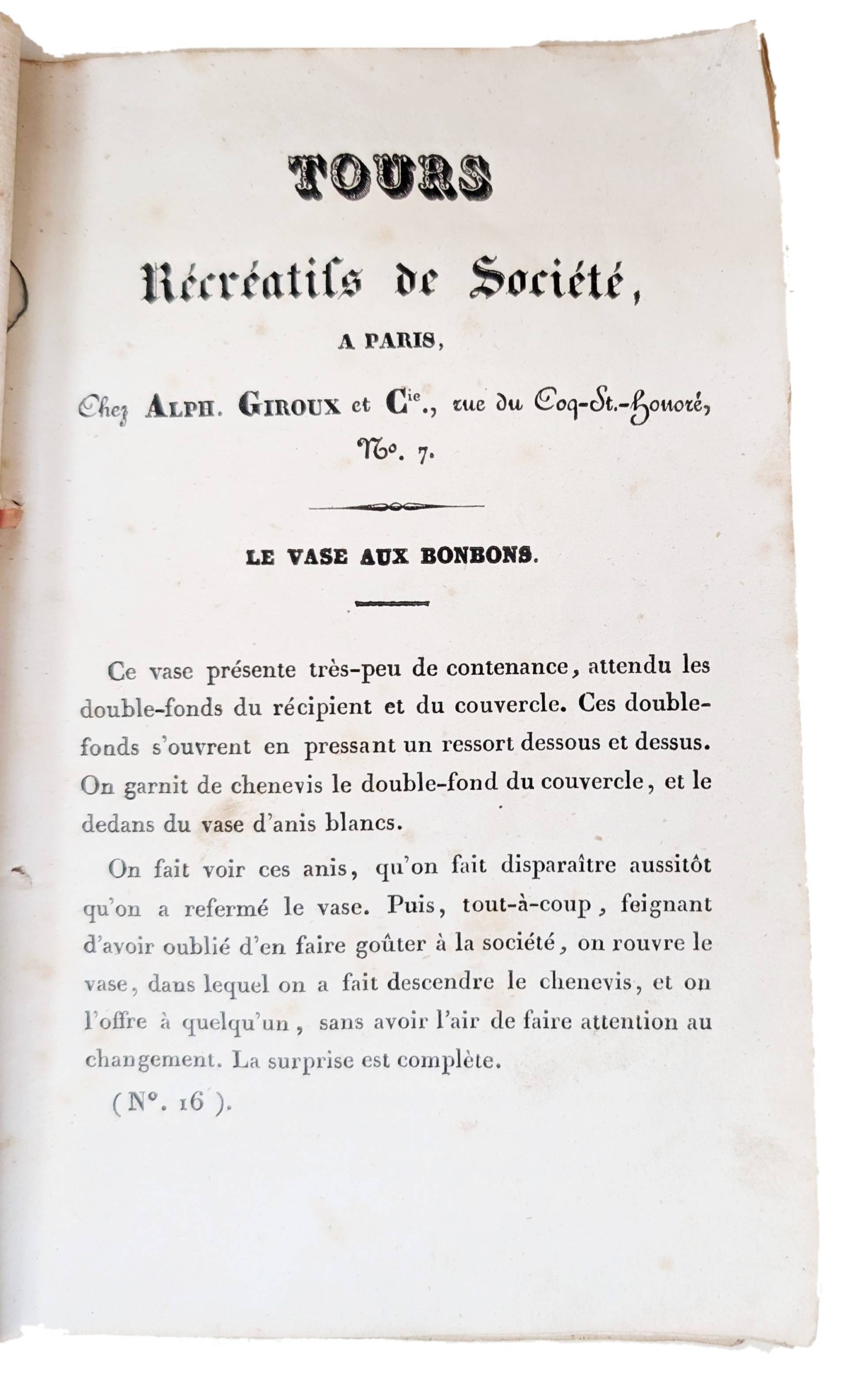
The set is accompanied by its original instructional booklet, „Tours Récréatifs de Société“, providing directions for several classic illusions. The apparatus is constructed primarily of turned boxwood and sheet metal. Giroux, known as the „Merchant of Princes,“ was the preeminent purveyor of luxury curiosities under the Restoration and the July Monarchy. While the firm is most famous for producing the first commercial daguerreotype cameras and high-end cabinetry for the French Royal family, their „Boîtes de Physique“ (Magic Boxes) were among the most sophisticated parlor entertainments of the era.
Complete sets of this caliber are seldom encountered outside of specialized private collections or museum archives, such as the Musée de la Magie in Paris. The survival of the original Instructional Manual and the Gibecière (conjurer’s apron) — ephemeral textile and paper elements that are usually lost to time — beautifully complete this set.
The contents include:
– The original instructional manual in brown paper wrappers, detailing the following tricks: „Les gobelets“; „Le vase aux bonbons“; „La clochette“; „Le vase a la piece“; „La boite a bascule“; „La muscade“; „Le coquetier“; „Sac a la piece“; „Les cartes algebriques“; „Les piliers de Salomon“.
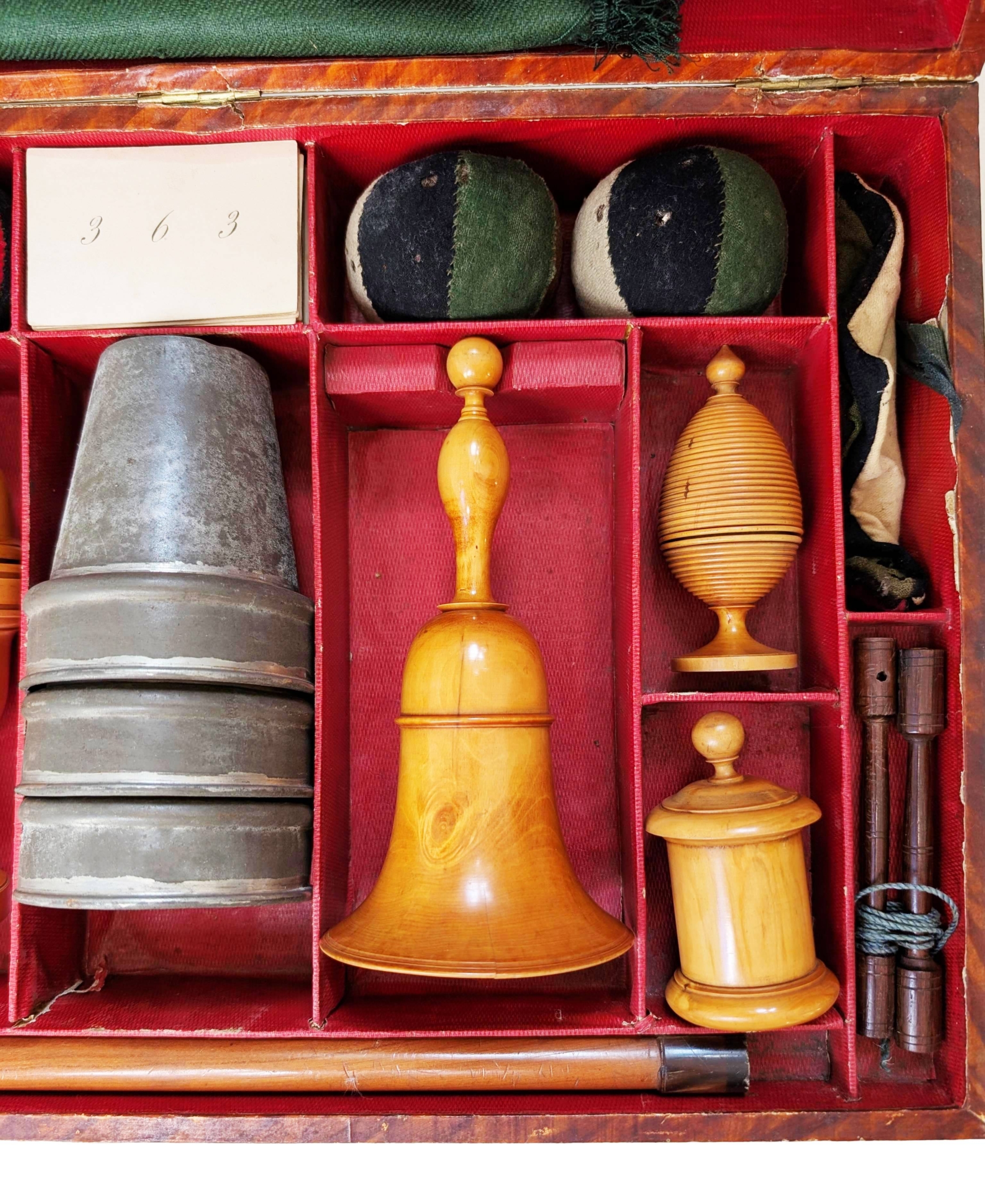
– A set of 3 nesting tin cups for the Cups and Balls routine, with 4 associated fabric-covered balls (muscades).
– A large turned boxwood „Vase aux Bonbons“ featuring a double-bottom mechanism for the disappearance and appearance of sweets or seeds.
– Various turned boxwood apparatus, including a bell-shaped „Passe-Passe“ vase, two lidded „millet“ vases with concentric ring decoration, and a small chalice.
– A wooden magic wand with darkened ends.
– A small painted metal figure of a soldier
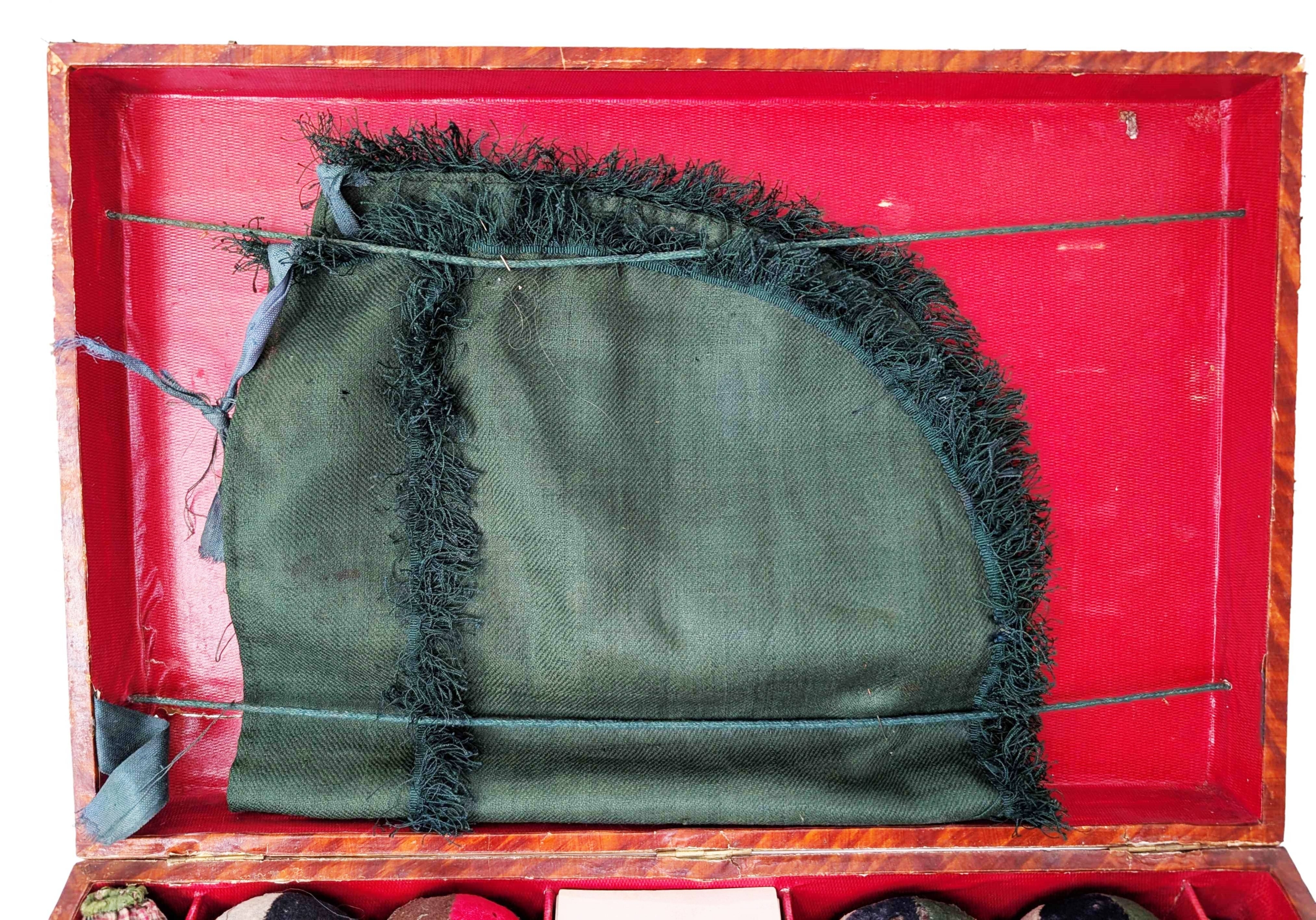
– A green fringed cloth apron (gibecière) with mounting strings.
– Two cloths
– a bundle of numbered cards
– two wooden sticks connected by a rope, called „Bâtons Chinois“
– A green fabric Gibecière (magician’s apron) with fringes and original waist ties, used for the concealment and „loading“ of props during a performance.
The wooden case shows wear consistent with age, including minor abrasions to the finish and light staining to the interior lining; the balls and the cloth on the right with several holes and somewhat stained; the tin cups show surface oxidation and some loss of original luster, the soldier figure is missing its head and shows some chipping; the instructional booklet somewhat bumped, the cover with several tears, some of the pages slightly stained.
Dating: The shop was founded around 1799 by François-Simon Alphonse Giroux (Paris, 1776-1848) at 7, rue du Coq-Saint-Honoré in Paris: initially selling novelty items and stationery, supplies for daguerreotype printing, and later, from 1834, cabinetmaking, under the name Alphonse Giroux. Taken over in 1838 by his sons Alphonse Gustave (Paris, 1809-1886) and André (Paris, 1801-1879) under the name Alphonse Giroux et Cie. Relocated in 1857 to 43, boulevard des Capucines. — According to the address in the booklet, the magic kit is surely made before 1857.
sold/verkauft